Meteorology 101
Both sleet and snow begin as ice crystals high in the atmosphere. Their final form depends entirely on the vertical temperature profile of the air they fall through.
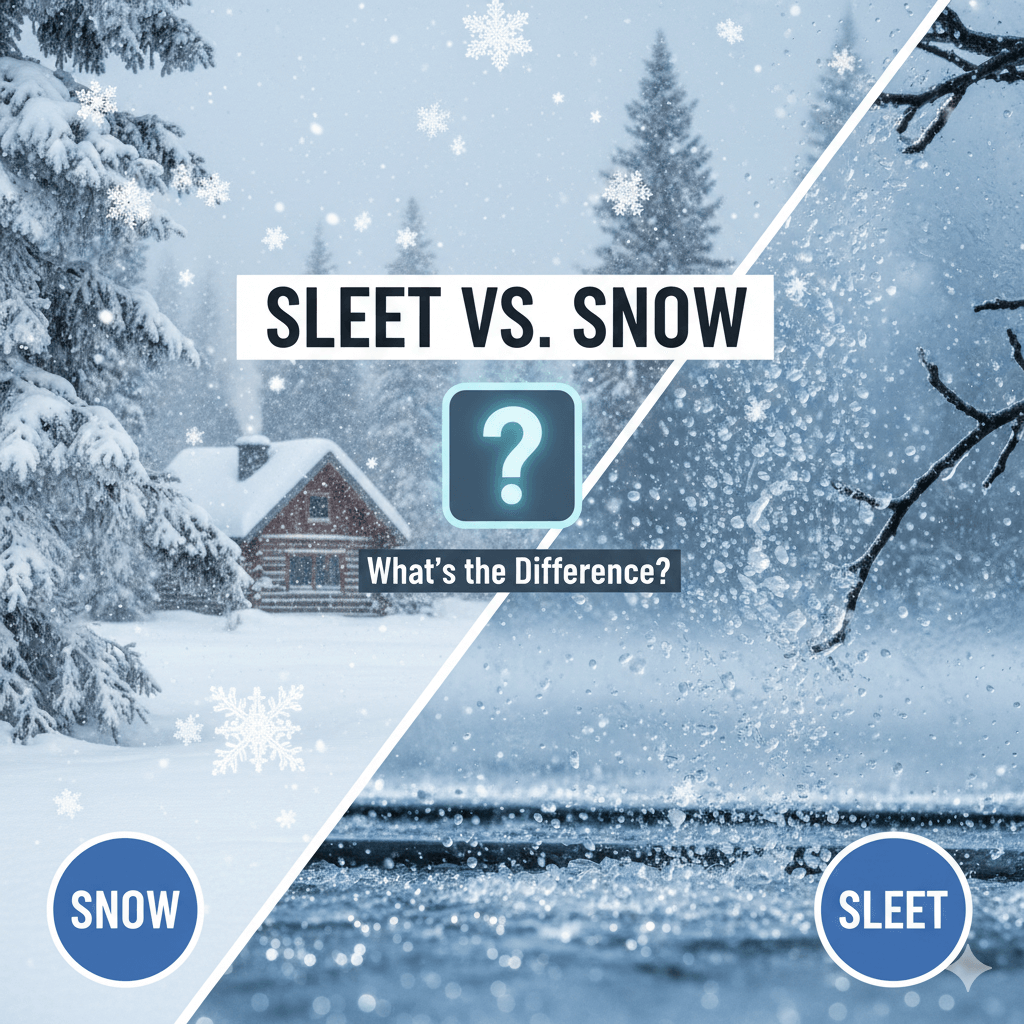
The Simple Distinction: Snow falls through air that stays below freezing. Sleet enters a “warm sandwich” layer, melts, and then refreezes into an ice pellet before impact.
The Path of Snow
For snow to reach your door, the air must remain at or below 0°C (32°F) from the cloud base to the ground. This preserves the delicate hexagonal crystal structure of the snowflake.
The Path of Sleet
Sleet occurs when snow falls through a warm layer mid-atmosphere and melts into rain. It then falls through a deep freezing layer near the ground, giving it time to refreeze into a solid ice pellet.
Quick Comparison
| Feature | Snow | Sleet |
|---|---|---|
| Atmosphere | Constantly < 0°C | Frozen → Melted → Refrozen |
| Structure | Delicate Crystals | Hard Pellets |
| On Impact | Soft accumulation | Bounces/Pings on glass |