
Why Geography Matters In Greenlandic Politics

The Short Answer
Geography is the primary driver of Greenlandic politics. Its strategic location makes it the “centre” of the Arctic, critical for U.S. and NATO missile defence (Pituffik Space Base). Its massive resource wealth—including rare earth elements—is the key to potential economic independence from Denmark. Finally, climate change is physically redrawing the map, melting ice to unlock new shipping lanes and mining sites, forcing Greenland into the heart of a “Scramble for the Arctic” between the U.S., Russia, and China.
What ignites the scramble for the Arctic?
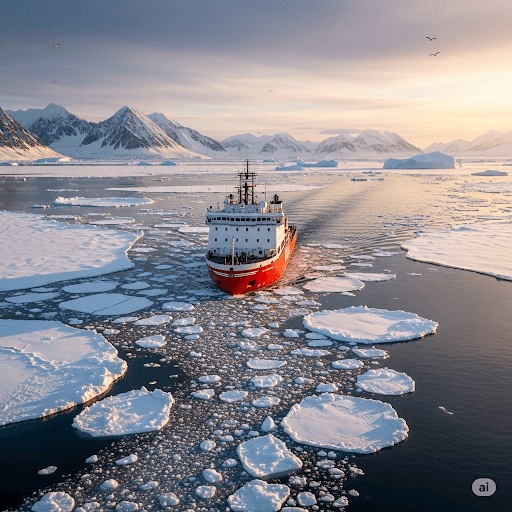
The “scramble” is primarily ignited by rapid climate change, which is warming the Arctic three times faster than the global average. As the polar ice cap recedes, it transforms a previously impenetrable frontier into a new arena of competition. This environmental shift acts as a catalyst, unlocking access to vast energy reserves, critical minerals, and strategic maritime corridors that were once physically and economically out of reach.
Energy & Minerals
The region holds an estimated 22% of the world’s undiscovered oil and gas, plus massive deposits of rare earth elements.
Maritime Routes
The Northern Sea Route and Northwest Passage could cut shipping distances between Europe and Asia by up to 40%.
Geopolitics
Overlapping territorial claims and Russia’s increased military footprint have forced NATO and China to redefine their Arctic strategies.
Why Geography Matters in Greenlandic Politics
Independence vs. Subsidies
Greenland relies on a $600M annual subsidy from Denmark. Massive mining projects (like the Kvanefjeld rare earth site) are seen as the only path to economic sovereignty and full independence from Copenhagen.
Pituffik Space Base
Located 750 miles north of the Arctic Circle, this U.S. base provides vital early warning for incoming ballistic missiles. Its presence makes Greenland a non-negotiable strategic asset for NATO.
The GIUK Gap
The Greenland-Iceland-UK gap is the primary maritime “choke point.” Any Russian naval movement from the Northern Fleet into the Atlantic must pass this line, making Greenland the frontline of Atlantic security.
The “Red Line” Policy
To prevent Chinese influence, Denmark and the U.S. have intervened in airport construction and mining deals, establishing that foreign investment in Greenlandic infrastructure is a matter of national security.
A Polar Centric View
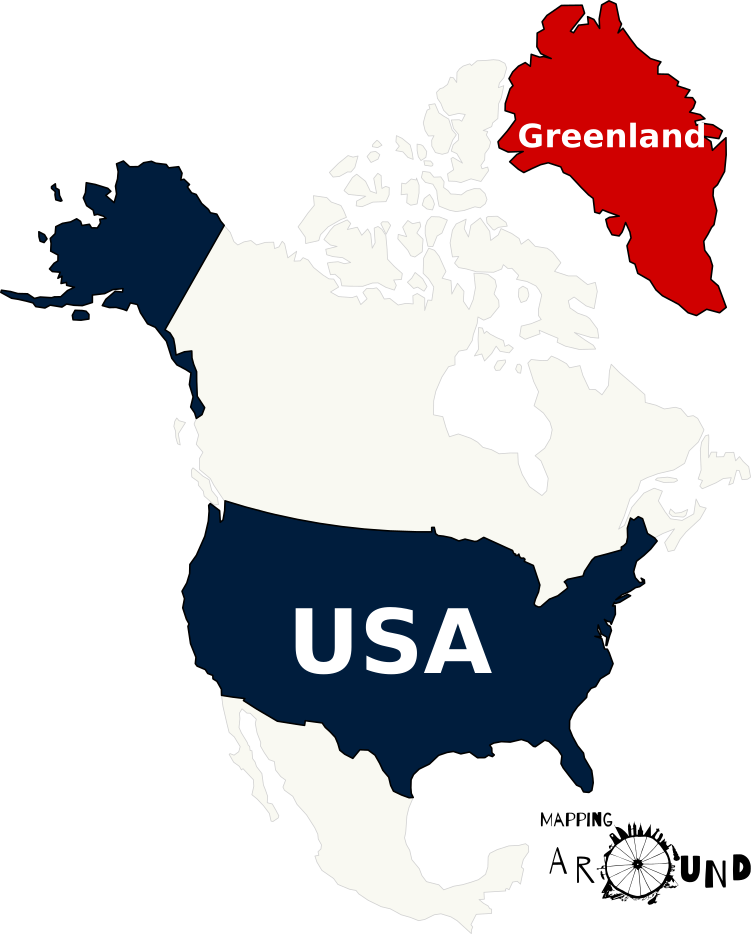
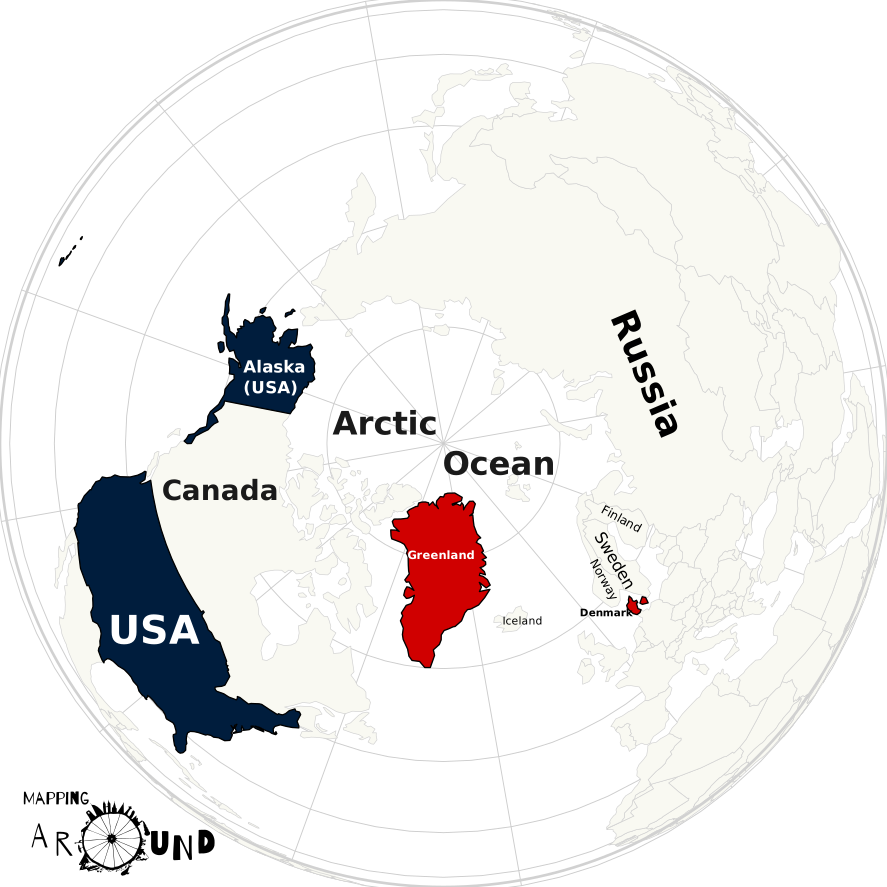
To understand Arctic geopolitics, you have to look “down” at the world from the North Pole rather than across it from the equator. When you centre the pole, the Arctic stops being the “edge” of the world and becomes the focal point. The polar centric view is less distorted and more relevant in the Arctic context. It reveals the spatial logic behind Mackinder’s Heartland Theory and the modern “Scramble for the Arctic”. Bringing into view the Proximity of Rivals and the Northern Sea Route.
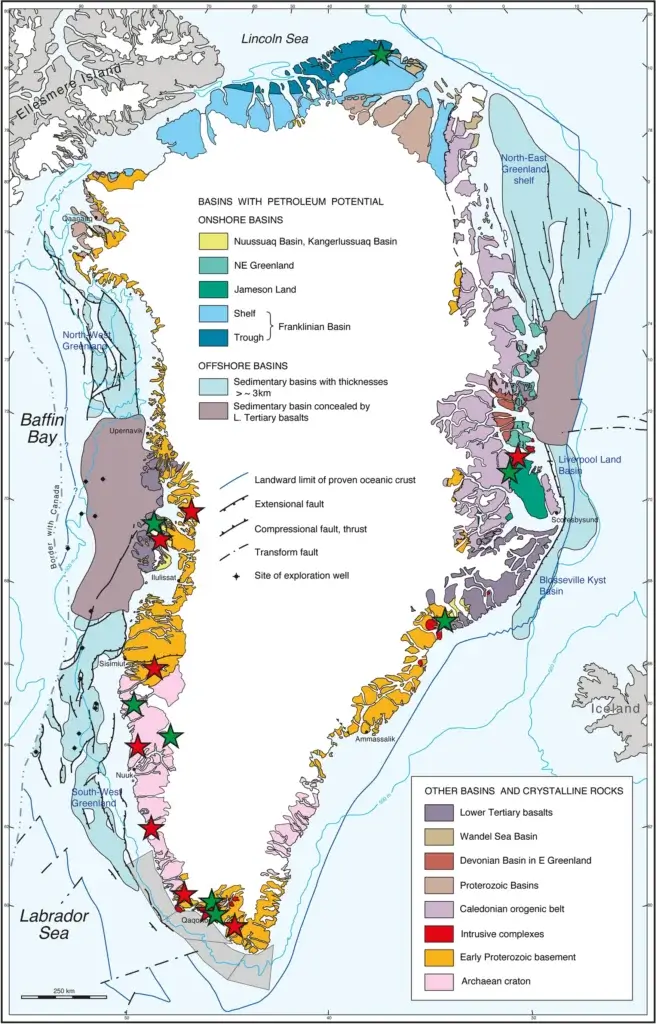
This geological map serves as the “why” behind the geopolitical interest in Greenland, revealing a strategic discrepancy between the island’s ice-covered interior and its resource-rich perimeter. While the central ice sheet reaches thicknesses of over 3 kilometres, the coastal fringes and offshore shelves—specifically the Baffin Bay and North-East Greenland shelf—feature thick sedimentary basins geologically primed for petroleum and mineral extraction. As climate change accelerates Arctic warming, receding sea ice physically unlocks access to these basins, transforming “frozen” assets into viable energy reserves and maritime corridors.
This environmental shift heightens the political stakes for the United States, Denmark, and a burgeoning Greenlandic movement seeking economic independence through resource sovereignty, all while intensifying NATO’s internal competition over overlapping territorial claims.